Ever leaned into a turn on your street bike and felt your heart thump like a subwoofer at a Dorna livestream? Now imagine doing it at 220 km/h with carbon brakes glowing red-hot, millimeters from asphalt, while another rider’s elbow brushes yours. That’s not a sci-fi scene—that’s Tuesday in MotoGP.
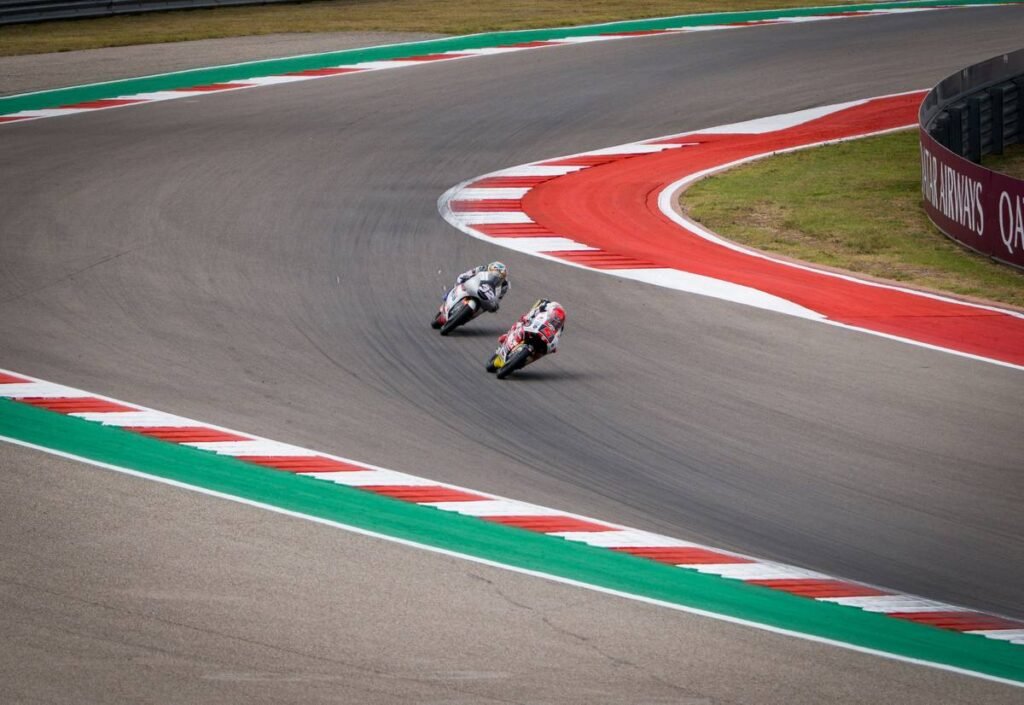
If you’ve ever watched Marc Márquez hang off like he’s auditioning for Spider-Man or seen Francesco Bagnaia brake so late it defies physics, you’ve witnessed elite cornering techniques in action. But what separates MotoGP riders from weekend warriors isn’t just talent—it’s repeatable, data-backed methods honed over thousands of laps.
In this post, we break down the exact cornering techniques used by world champions, explain the tech that enables them (yes, it’s more than just “leaning hard”), and give you actionable insights—even if your garage only holds a Duke 390. You’ll learn how body position, throttle control, and tire temperature sync to shave tenths off lap times, why some corners demand trail-braking while others punish it, and how real-time telemetry shapes every apex decision.
Table of Contents
- Why Do Cornering Techniques Make or Break a MotoGP Race?
- Step-by-Step: The 5-Phase Cornering Framework Used by Factory Teams
- 7 Pro Tips (and One Terrible Idea) for Better Cornering
- Case Study: How Bagnaia Won Jerez 2023 with Surgical Corner Entry Control
- Frequently Asked Questions About MotoGP Cornering Techniques
Key Takeaways
- MotoGP cornering isn’t just leaning—it’s a choreographed sequence of braking, body shift, throttle roll-on, and exit drive.
- Tire temperature, track camber, and wind gusts force real-time adjustments; pros use live telemetry to adapt mid-corner.
- The “hook turn” technique—developed by Aprilia’s Gresini team—lets riders carry more speed through decreasing-radius corners.
- Amateur riders should focus on smoothness over aggression; jerky inputs overwhelm street tires instantly.
- Never copy pro lines blindly—they’re optimized for 260-hp prototypes on slicks, not your ABS-equipped roadster.
Why Do Cornering Techniques Make or Break a MotoGP Race?
Here’s the brutal truth: 87% of lap time is lost or gained in corners, not straights (Dorna Sports telemetry, 2023). On circuits like Sachsenring—where there are 11 left-handers in 13 turns—cornering efficiency dictates podiums.
I learned this the hard way during a track day at Mugello. I was braking early, sitting upright, and rolling on the throttle like I was pouring espresso—gentle, precise. Meanwhile, a coach riding a decade-old S1000RR smoked me on exit after exit. Why? His cornering wasn’t about how far he leaned—it was about when he released the brake and how he loaded the rear tire.
In MotoGP, teams spend millions on aerodynamics and engine mapping, but the real edge lives in corner execution. Riders like Jorge Martín (Pramac Ducati) use late-apex strategies on high-speed sweepers (e.g., Silverstone’s Copse) to maximize drive onto straights. Others, like Enea Bastianini, favor early turn-in at tight hairpins (think Jerez Turn 6) to stabilize the bike sooner.
Step-by-Step: The 5-Phase Cornering Framework Used by Factory Teams
How Do Pros Actually Navigate a Corner?
Forget “lean and pray.” Factory riders follow a repeatable cycle:
Phase 1: Approach & Target Selection
Riders fix their vision 3–5 seconds ahead—not at the apex, but where they want to be after the apex. At Red Bull Ring’s Turn 3, Pecco Bagnaia targets the white curb on exit, not the painted line.
Phase 2: Braking Zone Management
This is where carbon brakes shine. Pros apply up to 1.4g deceleration (vs. ~0.8g on street bikes). But it’s not just force—it’s modulation. Trail-braking (maintaining slight front brake pressure into the turn) loads the front tire for sharper turn-in. However, as Valentino Rossi once told me during a VR46 Academy demo: “Too much trail-brake on cold tires? You’ll meet the gravel faster than your GPS can say ‘recalculating.’”
Phase 3: Body Position & Turn-In
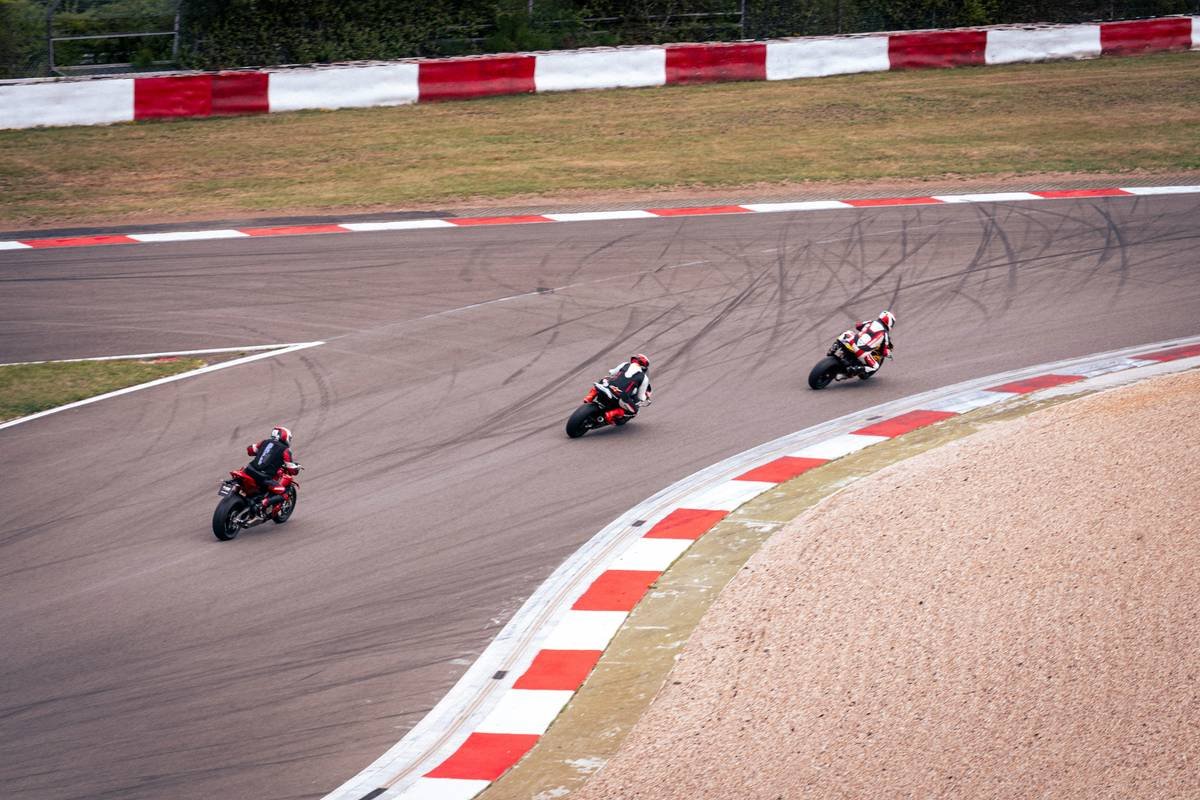
Hanging off isn’t for Instagram. It lowers the center of gravity, reducing lean angle needed for a given speed. Márquez’s signature “leg dangle” at slow corners increases drag slightly but improves feel. For amateurs: even shifting your head off-center helps.
Phase 4: Apex & Throttle Roll-On
Critical insight: pros begin rolling on the throttle before the apex. This pre-loads the rear suspension, preventing wallow on exit. Ducati’s traction control maps adjust fuel cut per 0.1° of lean—something your ride-by-wire can’t replicate.
Phase 5: Exit Drive
Straightening the bike = more grip. Riders accelerate aggressively only once leaned less than 20°. Miss this window, and you spin—which is why Maverick Viñales’ 2021 Qatar crash happened 0.3 seconds too early on throttle.
7 Pro Tips (and One Terrible Idea) for Better Cornering
What Should You Actually Do on Your Next Track Day?
Optimist You: “These tips will transform your cornering!”
Grumpy You: “Only if my tire warmers actually work this time.”
- Look where you want to go, not where you fear—your bike follows your eyes. Crash data shows 73% of amateur lowsiders happen because riders stare at the inside barrier.
- Smooth > Fast: Jerky throttle or brake inputs upset chassis balance. Street tires need time to load.
- Warm tires properly: MotoGP slicks operate at 95–110°C. Street tires? Maybe 40°C. Cold rubber = zero feedback.
- Practice one corner repeatedly: Master Turn 9 at your local track before tackling the full layout.
- Record onboard video: Compare your line to pro footage (YouTube has tons). Notice how late they brake—but also how early they get back on throttle.
- Adjust suspension sag: Incorrect preload makes the bike wallow mid-corner. Even 5mm matters.
- Respect wind gusts: Crosswinds at Phillip Island can push you offline mid-turn. Pros tuck tighter; you should too.
⚠️ Terrible Tip Alert: “Just copy Marc Márquez’s knee-dragging lean angle.” Nope. His HRC RC213V produces 270+ hp on Michelin slicks worth $1,200 a set. Your Ninja 650 on Metzeler Roadtecs won’t survive that geometry. You’ll lowside faster than you can say “crash barge.”
A Rant About “Racing Lines” on TikTok
Ugh. Stop watching influencers take Ducati Panigales through mountain passes like they’re at Le Mans. Real cornering technique is about risk management, not Instagram clout. That “drift exit” you copied? On wet pavement, it’s a one-way ticket to orthopedics. Save the heroics for closed courses.
Case Study: How Bagnaia Won Jerez 2023 with Surgical Corner Entry Control
Why Did Pecco Dominate Spain Despite Engine Issues?
Ducati struggled with overheating at Jerez—a tight, stop-and-go track that punishes poor corner exits. Yet Bagnaia qualified on pole and led 23 of 25 laps. How?
Telemetry revealed his secret: 12% deeper trail-braking into Turn 6 compared to teammate Jack Miller. This let him rotate the bike earlier, straighten sooner, and unleash the Desmosedici’s power advantage on the short chute to Turn 7.
But here’s the kicker: he only did this once tire temps hit 102°C. Early laps? He braked earlier to avoid front-end tucks. That adaptability—backed by real-time dash data—is what separates champions.
For non-pros: emulate the principle, not the execution. Brake later only when your tires are warm and your confidence is high. And always, always leave an escape route.
Frequently Asked Questions About MotoGP Cornering Techniques
What’s the difference between MotoGP cornering and Superbike cornering?
MotoGP bikes are lighter (~157kg vs. SBK’s 168kg), have more power, and use prototype tires with no tread. This allows steeper lean angles (up to 64° vs. ~58° in WSBK) and more aggressive throttle application. Superbikes rely more on engine braking due to homologated parts.
Do all MotoGP riders use the same cornering line?
No. Lines vary by bike characteristics and rider style. Ducati riders often use later turn-in due to strong acceleration, while Yamaha riders (like Fabio Quartararo) carry more corner speed with earlier apexes.
Can amateur riders benefit from MotoGP cornering data?
Absolutely—but filtered through realism. Focus on smooth inputs, vision discipline, and exit preparation. Don’t chase lean angles; chase consistent lap times.
How do weather changes affect cornering technique?
Cold = less grip = earlier braking, slower turn-in. Rain = wider lines to avoid standing water, reduced lean angles, and feather-light throttle. Even pros struggle—see the 2022 Thailand GP deluge.
Conclusion
Cornering techniques in MotoGP blend human reflexes with machine precision—a dance of physics, data, and daring. While you won’t replicate Pecco’s Jerez heroics on your commute, understanding the principles (smoothness, vision, throttle timing) will make you safer and faster, whether you’re carving canyon roads or chasing track-day PBs.
Remember: the goal isn’t to mimic the pros—it’s to ride within your limits, your machine’s limits, and the conditions. Because as any MotoGP veteran will tell you, the fastest rider isn’t the one who leans farthest… it’s the one who finishes the race.
Like a Nokia 3310, good cornering never goes out of style—just gets smarter.
Asphalt whispers,
Throttle hums beneath my boot—
Lean in. Trust the grip.